
Cake Before Icing: A Sustainable Framework for Growing a Prop-Trading Business
Secure personal needs, taxes, reserves, operating costs, and a repeatable process before using realized prop-trading results to fund additional accounts or complexity.
There is a point in almost every prop trader’s journey when progress starts to create a new kind of pressure. One account becomes two. A first payout makes another evaluation feel affordable. A good stretch makes it tempting to add size, platforms, firms, or tools all at once.
That is where the cake-and-icing framework comes in.
The cake is the part that has to be protected first: your actual needs, business costs, taxes, reserves, account cushion, and a repeatable trading process. The icing is expansion—more evaluations, more funded accounts, more size, and more operational complexity.
Icing can make the business bigger. It cannot replace the foundation underneath it.
This is not a formula for guaranteed payouts, funding, or income. It is a practical way to separate progress from pressure so that growth decisions are based on realized results and a stable process rather than urgency.
Why Expansion Feels Productive—Even When It Is Premature
Buying another evaluation feels like action. Adding accounts feels like scale. Increasing size feels like confidence. But none of those choices automatically improve the process that produces the result.
More accounts can amplify a disciplined workflow. They can also amplify overtrading, inconsistent sizing, missed rules, platform mistakes, and the emotional need to make every account “do something.”
The question is not simply whether another account is affordable today. The better question is whether the business has earned the added complexity.
A prop-trading operation is not stronger because it has more account logos on a dashboard. It is stronger when its costs, rules, risks, payouts, and decisions remain understandable under pressure.
What Counts as the Cake?
The cake is the portion of the operation that should be secure before expansion becomes the priority.

- Personal obligations. Trading capital and prop-firm spending should not compete with rent, food, healthcare, debt payments, or other necessities.
- Taxes and reserves. A payout is not automatically spendable or expandable capital. Set aside whatever your situation requires and get qualified tax or legal help when needed.
- Operating costs. Evaluation fees, activation fees, resets, data, platforms, software, and subscriptions belong in the business record.
- Account cushion. A headline account balance is not the same thing as safe withdrawal capacity. Each firm’s drawdown, consistency, payout, and inactivity rules can affect what is actually available.
- A repeatable process. The setup, size, trade-count limits, stop logic, daily loss rules, and review routine should be stable enough to repeat without adding emotional pressure.
- Verified results. Expansion should be funded from realized, reconciled business results—not a projected payout, an unrealized balance, or the hope that the next account will solve the last account.
The Payout Target Is Not the Trade Setup
One of the easiest ways to damage the cake is to let an external account target override what is actually on the chart.
You may be close to a payout threshold. You may want to finish an evaluation today. You may feel that one more trade would make the week look complete. None of those facts create a valid market setup.
A useful pre-trade question is simple: Would I take this exact trade if the payout, evaluation target, and account balance were hidden from me?
If the answer is no, the trade is probably being manufactured for an account objective rather than selected from the trading plan.
Small positive days, flat days, missed trades, and imperfect exits are part of operating a real process. The danger often begins when a trader refuses to let a modest day stay modest.
A Five-Gate Test Before Adding Icing
Use five gates before adding another evaluation, funded account, or layer of complexity.
Gate 1 — Needs Are Covered
Personal obligations, taxes, reserves, and required business costs are not being deferred to pay for expansion.
Gate 2 — The Current Account Is Understood
You know the live rules, available cushion, payout status, and consequence of a rule violation. Because firm terms can change, verify them directly with the firm.
Gate 3 — The Process Is Stable
Position size, setup selection, trade count, and stopping rules are consistent enough that another account will not require a different personality.
Gate 4 — The Business Is Net Positive After Costs
Track fees, resets, software, data, payouts, and other expenses. Gross payouts alone do not show whether the operation is paying for itself.
Gate 5 — Expansion Has a Written Limit
Decide in advance how much of realized business results may be reinvested, what will be added, and what condition stops the expansion.
If one of those gates is not clear, the answer does not have to be “never.” It can simply be “not yet.”
Scale One Variable at a Time
When the foundation is ready, add icing slowly enough that you can tell what changed.
Adding a new firm, more accounts, larger size, a trade copier, and a new platform at the same time makes it difficult to identify the source of a mistake. A better approach is to change one variable, observe the workflow, and review the outcome before adding another.
For example, a trade copier can reduce repetitive order entry in a multi-account workflow, but it also adds operational risk. Leader/follower configuration, instrument mapping, quantity rules, connection health, rejected orders, and emergency flatten procedures must be understood before convenience becomes scale.
The tool should support an established process. It should not be asked to create discipline that is not already there.
Run the Prop Operation Like a Business
A business-minded review looks beyond whether a trade won or lost.
Track each firm and account separately: purchase and activation costs, resets, renewals, rule set, current stage, cushion, payout eligibility, realized payouts, and net profitability. Then review the whole operation together.
That record answers questions emotion cannot answer reliably:
- Which accounts or firms actually fit the way you trade?
- How long does it take to recover the full cost of an account?
- Are payouts covering expansion, or are personal funds still subsidizing it?
- Does adding accounts improve execution efficiency or increase mistakes?
- Which recurring costs no longer earn their place?
This is the role FundedFlow is designed to support: keeping accounts, payouts, expenses, renewals, and the trading-business ledger in one reviewable workspace.
Where Kahuna Fits
Once the operating process is clear, templates and tools can reduce the time required to prepare, execute, and review.
Kahuna brings PonoTrading’s charting tools, FundedFlow access, risk-management resources, advanced releases, and optimized chart and workspace templates into one membership. The value is not “more stuff.” The value is starting from a structured environment instead of rebuilding the workflow from scratch.
The Practical Rule
Get the cake consistently. Protect it. Reconcile it. Then decide how much icing the business has earned.
Growth that comes from a protected base feels different from growth driven by urgency. It gives you room to stay selective, accept small days, and let the chart—not the account target—decide whether a trade belongs.
Methodical growth can feel slow. Repeated resets, forced trades, and unmanaged expansion are usually slower.
Educational and Risk Notice
This article is for educational and informational purposes only and is not financial, investment, tax, legal, or trading advice. Futures, forex, and leveraged trading involve substantial risk and are not suitable for every person. Prop-firm rules, pricing, payout terms, and account conditions vary and can change; verify current terms directly with each provider. No representation is made that any trader will pass an evaluation, receive funding, earn a payout, make a profit, or achieve results similar to any example.
Related Articles

RTH Market Prep: the PonoTrading playbook
RTH Market Prep is the desk habit in front of the first click: overnight location, clocks, expected-move bands, key levels, remaining size, and when to stand down. It is not a signal and not a forecast.
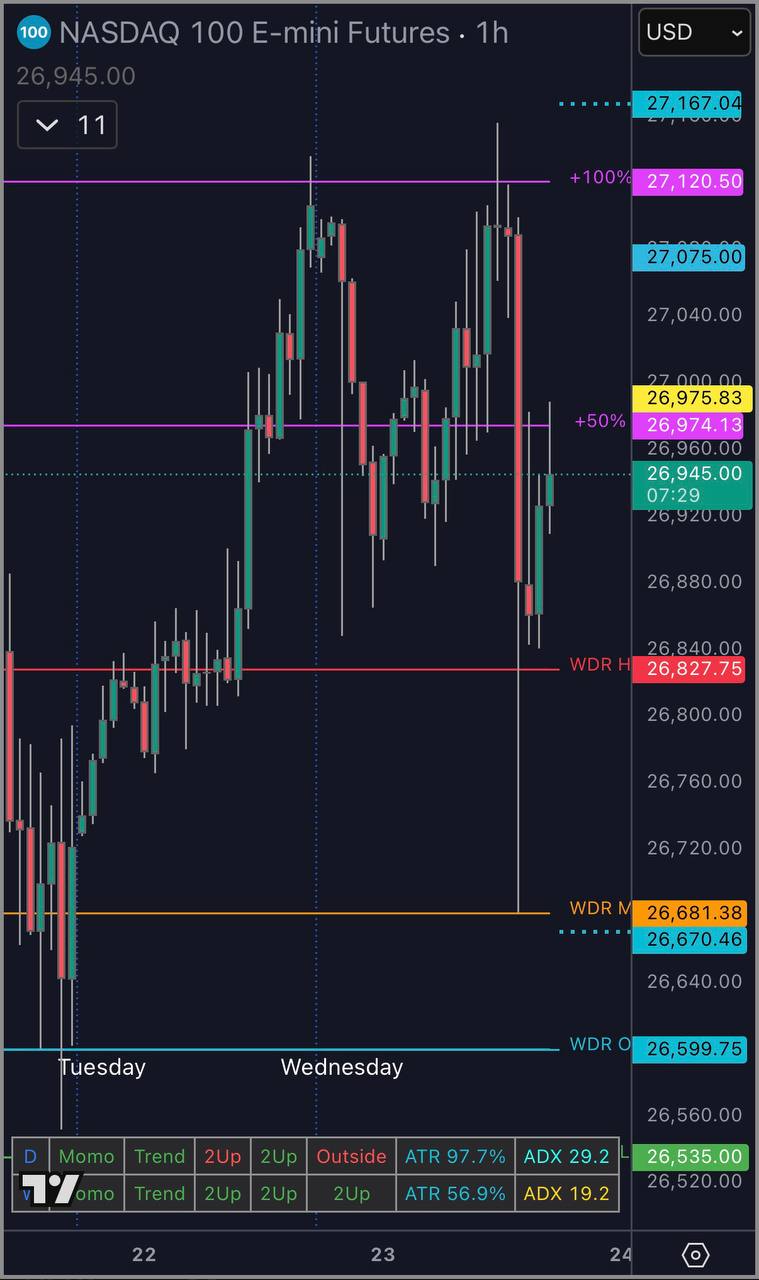
The Weekly Dealing Range Median: The One Level That Caught the Low to the Tick
Today NQ tagged a projected level to the exact tick and reversed. That level wasn't Fibonacci. It wasn't a moving average. It was the Weekly Dealing Range Median — the most underused level in retail trading.
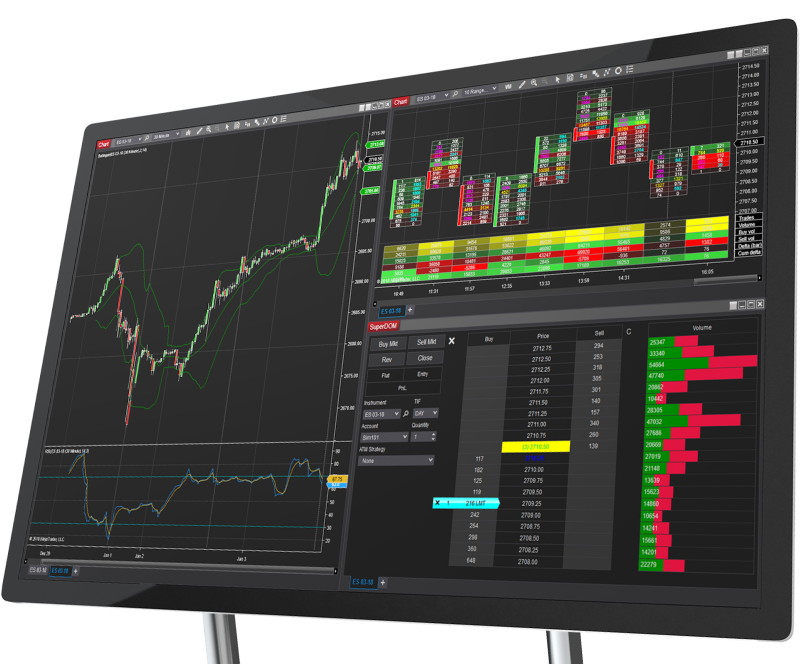
How to Set Up NinjaTrader & Connect Your PonoTrading Indicators
Learn how to create a free NinjaTrader account, download NinjaTrader 8, install the platform, and connect your PonoTrading indicators the right way.